7 Warning Signs That You May Need Joint Replacement Surgery — Don't Ignore These
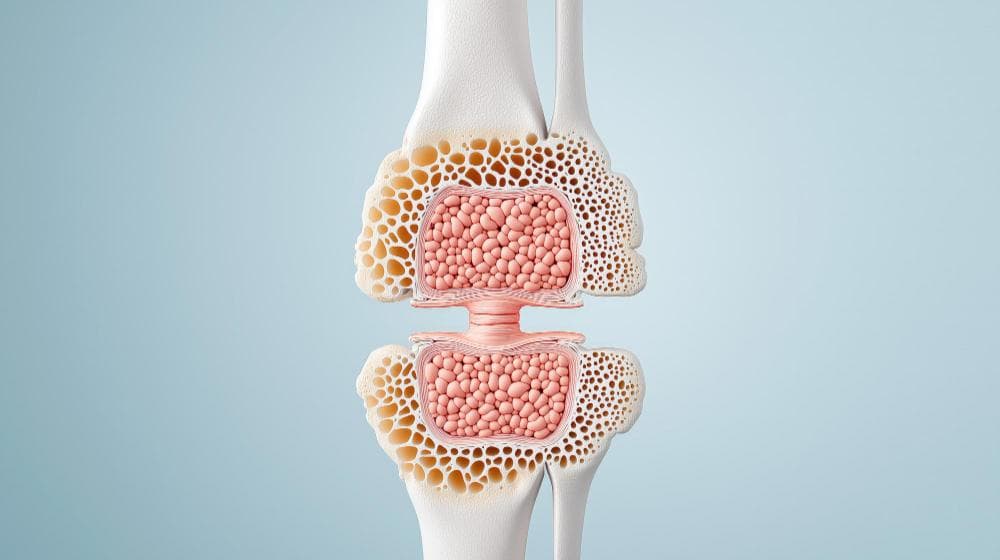
This is a cross-sectional view of the knee joint viewed up close.
Most people who eventually need joint replacement surgery don't arrive at that decision overnight. They spend months — sometimes years — managing their pain with medication, finding positions to sit and sleep that hurt less, quietly modifying their life around a joint that is slowly failing. By the time they see an orthopaedic surgeon, the damage is often more advanced than it needed to be.
This guide is for people who are wondering whether the pain they have been living with has crossed into territory that needs proper assessment. It does not tell you whether you need surgery — that requires imaging and examination. But it tells you when it is time to stop waiting, stop managing on your own, and see a specialist in Greater Noida.
Sign 1: Pain That Interferes With Sleep
Pain that wakes you up at night, or that stops you from falling asleep, is not typical joint pain. Routine arthritis pain flares with activity and tends to ease with rest. Pain that persists through the night — even when you are lying still — suggests the joint inflammation is significant enough that rest is no longer giving relief.
Night pain is one of the clearest indicators that conservative management is no longer adequate. If you have been adjusting pillows and positions for months trying to find a way to sleep without pain, it is time for a proper evaluation.
Sign 2: Pain That Limits Daily Activities You Used to Take for Granted
This is perhaps the most telling sign. Not the pain itself, but what it has stopped you from doing.
Can you walk to the market without stopping? Can you climb one flight of stairs without gripping the railing for help? Can you cook a meal without sitting down halfway through? Can you get into and out of a car without significant discomfort?
When arthritis begins to take these things away — activities that were once automatic and effortless — the joint has reached a level of deterioration that deserves to be evaluated for surgical options.
The question that matters here is not "how bad is the pain on a scale of 1–10?" It is: "what have you stopped doing because of this joint?"
Sign 3: Swelling That Comes Back Repeatedly
Some joint swelling is normal after periods of increased activity. The problem is when the swelling becomes persistent — present most days, slow to reduce, and returning quickly after it resolves.
Chronic swelling in the knee or hip indicates ongoing joint inflammation. The lining of the joint (synovium) is reacting to damaged cartilage and bone-on-bone contact. This kind of chronic inflammation accelerates the damage cycle and contributes to the progressive stiffening many patients experience.
If your knee or hip has been visibly swollen most days for the past several months, it needs imaging and assessment.
Sign 4: The Joint Has Become Stiff — Especially in the Morning
A stiff knee or hip in the morning that takes time to "warm up" is one of the early signs of significant arthritis. In the early stages, this stiffness resolves within 20–30 minutes. As the condition progresses, the stiffness lasts longer, and some patients find it never fully clears.
Morning stiffness lasting more than 30–45 minutes daily is a signal worth taking seriously. When stiffness extends through the morning and into the afternoon, or limits your ability to move normally from the moment you get out of bed, the joint has reached a stage that warrants specialist input.
Sign 5: Conservative Treatments Have Stopped Working
This is the sign that most clearly moves the conversation toward surgical options. The conservative management pathway for knee or hip arthritis includes:
- Physiotherapy and specific strengthening exercises
- Anti-inflammatory medications (NSAIDs)
- Weight management
- Activity modification
- Intra-articular injections (cortisone, hyaluronic acid, PRP)
When these have all been genuinely tried — not briefly and superficially, but with proper compliance and adequate duration — and the pain and function remain significantly impaired, surgery deserves to be on the table.
Many patients in Greater Noida have had one physiotherapy course that did not help much and conclude that "everything has been tried." That is usually not the case. But for patients who have completed proper, supervised rehabilitation and tried injections without lasting relief, the question of surgery is entirely legitimate.
Sign 6: X-rays Show Bone-on-Bone Changes
This is a radiological finding, but patients often get their own X-ray reports and see the words "bone-on-bone" without knowing what to do with that information.
Bone-on-bone means the cartilage cushion that normally separates the joint surfaces has been lost completely in that compartment. The bones are now in direct contact. This is the structural endpoint of arthritis — there is no cartilage to restore or regenerate through medication or injections. The only way to restore a smooth joint surface at this point is surgery.
Bone-on-bone changes on X-ray, in combination with significant pain and functional limitation, is one of the clearest indications for joint replacement surgery evaluation.
Sign 7: Your Quality of Life Is Significantly Affected
This one is less clinical but arguably the most important.
Has your world gotten smaller because of your knee or hip? Have you stopped visiting relatives because getting into a car hurts? Have you given up walking with friends, going to religious events, playing with grandchildren, or pursuing hobbies you enjoyed? Are you taking painkillers every day just to get through normal activities?
Joint replacement surgery is ultimately a quality-of-life intervention. It exists to restore function, reduce pain, and give people back the activities that matter to them. The technical indications matter — bone-on-bone on X-ray, failed conservative management — but the human indication matters too: this joint is no longer letting you live the life you want to live.
When that is true, a consultation with an experienced joint replacement surgeon is not a dramatic step. It is the logical next one.
What a Consultation with Dr. Akash Dubey Looks Like
When you come to the Your Bone Mechanic clinic at Gaur City 2, Greater Noida West, the consultation is unhurried. Dr. Akash Dubey — MBBS (KGMU, Lucknow), MS, DNB Ortho, FIJR, Robotic Surgery Certified — takes a full history, examines the joint, and reviews all imaging.
The conversation covers:
- What has already been tried
- What the imaging shows
- Whether you are a candidate for surgery and what type is most appropriate
- If surgery is not yet the right answer, what else can be done
Surgery is never the default answer. It is the answer when the evidence — clinical, functional, and radiological — supports it. Patients leave the consultation knowing exactly where they stand and what the options are.
What Happens If You Keep Waiting?
Waiting is not without consequences. As arthritis progresses:
- The joint deformity increases — correcting moderate bow-leg or knock-knee is significantly easier than correcting severe deformity
- Muscle wasting around the joint accelerates — weakened muscles make surgery and recovery harder
- Overall fitness declines as activity is further limited
- The surgery itself becomes more complex when the damage is more extensive
This does not mean surgery should be rushed before it is indicated. But it does mean that when the signs above are clearly present, continued delay often makes things harder rather than easier.
Frequently Asked Questions
Q: Do these signs definitely mean I need surgery?
Not automatically. They mean you need proper assessment — imaging and clinical examination by an orthopaedic specialist. Surgery is only indicated when structural damage is confirmed, conservative options are exhausted, and the patient's overall health supports it.
Q: How quickly can I get an assessment in Greater Noida?
Appointments at Dr. Akash Dubey's Your Bone Mechanic clinic in Gaur City 2, Greater Noida West are arranged by calling +91-8130441429.
Q: What if I'm scared of surgery?
Fear of surgery is completely understandable. A good consultation should give you clear, honest information about what the surgery involves, what the recovery looks like, and what the realistic outcomes are — so that your decision is based on information, not fear.
Q: I have all these signs but I'm managing. Should I still get an assessment?
Yes. "Managing" with pain does not mean the situation is fine. It often means the joint is continuing to deteriorate while you accommodate around it. An assessment tells you where things actually stand.
Contact Dr. Akash Dubey — Your Bone Mechanic
Dr. Akash Dubey
MBBS (KGMU, Lucknow) | MS | DNB Ortho | FIAS | FIJR | FIFA Diploma in Football Medicine
Robotic Surgery Certified | Member, AOPAS
Clinic: Shop No. 24, Ground Floor, Gaur City Arcade, Near Sarvodaya Hospital, Gaur City 2, Greater Noida West, U.P. – 201301
To book a joint replacement consultation in Greater Noida, call +91-8130441429