Plaster Application
A well-applied cast or splint protects the injury and holds the bone in the correct position, allowing safe healing while keeping you as comfortable as possible.
Understanding the Condition
Casting is an established method to immobilise and support injured bones in a stable position, allowing natural healing for stable fractures and post-surgical care.
What causes this condition?
Plaster immobilisation is used following fractures, ligament injuries requiring protection, and post-operative stabilisation after certain surgical procedures, where keeping the area still is necessary for proper healing.
Who is commonly affected?
Plaster casting is used across all age groups — commonly for wrist, forearm, ankle and lower leg fractures in children and adults, and as part of post-surgical protection following various orthopaedic procedures.
Symptoms/indications to watch for
A confirmed stable fracture on imaging, a ligament injury requiring protected rest, or post-surgical instructions for immobilisation are the main indications. Patients in a cast should watch for increasing pain, numbness, swelling of the fingers or toes, or skin discolouration, which need prompt attention.
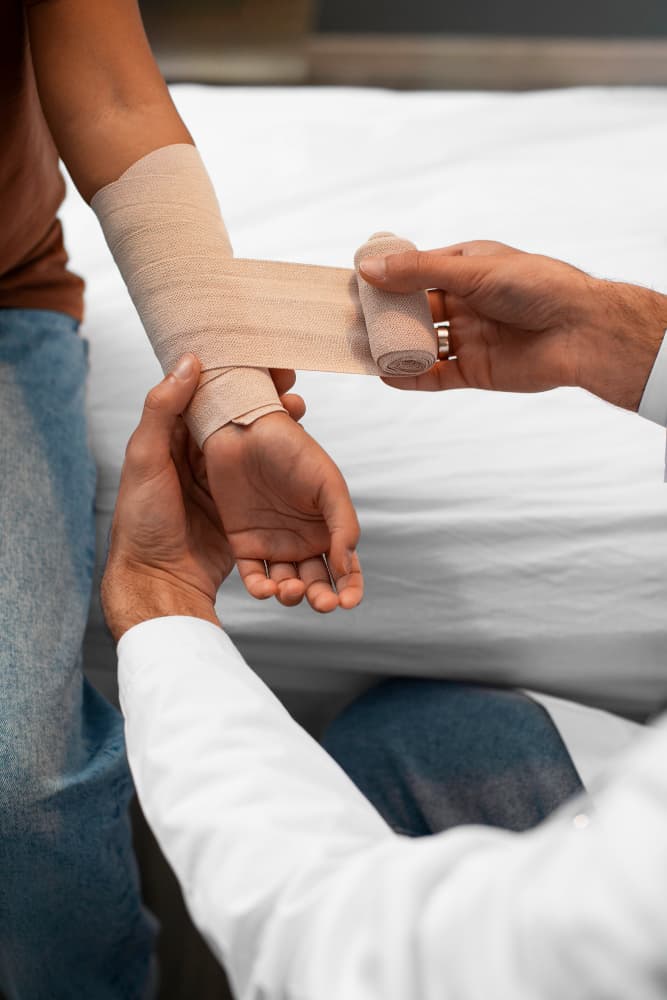
How it quietly reshapes daily life.
A cast restricts movement of the affected limb for the period of healing, which can mean temporary adjustments to work, driving, bathing and daily tasks. Most patients adapt within the first few days, and clear guidance on what activities remain safe makes a significant difference to comfort during this period.
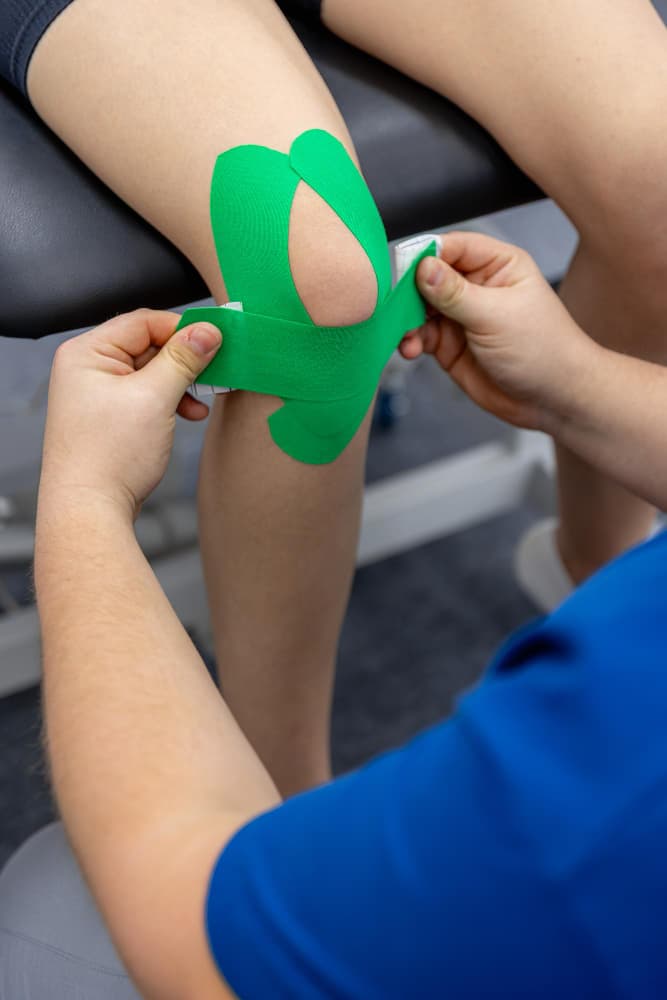
When Should You Consider Plaster Application?
Plaster application is appropriate whenever a fracture or injury is stable enough to heal with immobilisation alone, or as directed following surgery to protect the repair while it heals — determined through clinical examination and imaging.
TREATMENT OPTIONS
Non-surgical approaches
For appropriate fractures, plaster casting is itself the definitive non-surgical treatment, used alongside regular follow-up X-rays to confirm the bone is healing in good position, with the cast adjusted or removed as healing progresses.
When surgery becomes necessary
If imaging shows the fracture is unstable, displaced, or not healing in acceptable position despite casting, surgical fixation may be recommended instead, after which a shorter period of post-operative splinting or casting may still be used for protection.
What happens during the procedure?
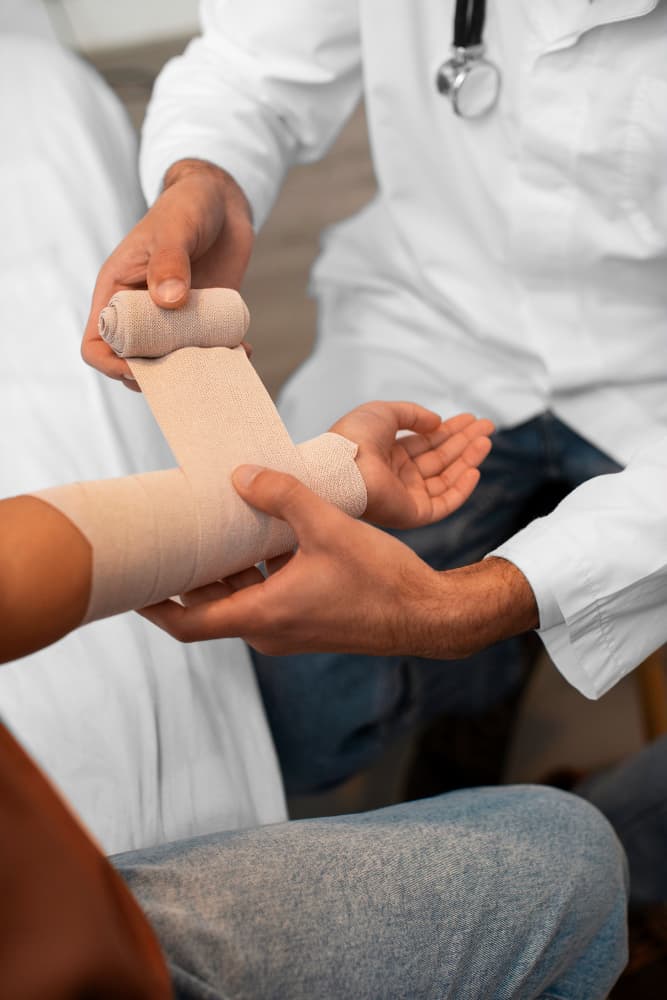
After the fracture or injury is confirmed and any necessary realignment performed, padding is applied to protect the skin, followed by a plaster or fibreglass cast moulded to hold the limb in the correct position. The cast is checked for proper fit and circulation before the patient leaves, with clear instructions on care, activity precautions and the follow-up schedule for monitoring and eventual removal.
BENEFITS
What Patients Often ExperienceAfter Treatment
A properly applied and monitored cast allows fractures to heal in good alignment without the need for surgery in many cases, with most patients regaining full use of the limb once healing is complete and guided rehabilitation, where needed, helps restore strength and movement afterward.
Why Patients Choose
Dr. Akash Dubey
Six commitments that shape every visit, every plan, every recovery.

Expert Orthopedic Care
Sub-specialty expertise across joint, sports and trauma orthopedics.

Advanced Surgical Techniques
Minimally invasive, computer-assisted and modern arthroscopic methods.

Patient-Centric Approach
Treatment plans built around your lifestyle, goals and timelines.

Personalised recovery roadmap
A printed week-by-week plan you'll actually follow.

Long-term mobility focus
We treat the next ten years, not just the next ten days.

Pelvic & Acetabular Expertise
Focused expertise in pelvic and acetabular fracture surgery.
What You Gain

Recovery Focused
Structured rehabilitation programs designed to help patients regain mobility, strength, and confidence after surgery.

Long Term Pain Relief
Advanced treatment solutions aimed at reducing chronic pain and improving everyday comfort.

Improved Mobility
Helping patients return to daily activities with greater ease, stability and freedom of movement. People move freely.
Answers to the questions patients ask most.
Don't see your question? Reach out , we'd rather have the conversation than leave you guessing.
If knee pain continues to affect your daily activities, sleep, or mobility despite medications, physiotherapy and lifestyle modifications, knee replacement may be an option. A detailed evaluation can help determine the most suitable treatment for your condition.
Recovery depends on the injury and procedure. Many patients return to light activity within a few weeks and to full sport over a structured rehabilitation programme tailored to their goals.
Most patients begin guided movement soon after surgery, progress through physiotherapy, and steadily regain function over weeks to a few months with the right support.
Yes. Many cases are managed with medication, physiotherapy, lifestyle changes, activity modification and injections. Surgery is recommended only when conservative options no longer provide relief.
We listen to your history, examine you, review any imaging and discuss honest options. You leave with a clear understanding of your condition and the path forward.
Take the first step towards pain-free movement.
Book a personal consultation with Dr. Akash Dubey and receive a clear, honest path forward, tailored to your goals and timeline.
Call ClinicBook your consultation
Fill out the form below and we'll get back to you within 24 hours