Acetabular Fracture vs. Hip Fracture — What's the Difference and How Is Each Treated?
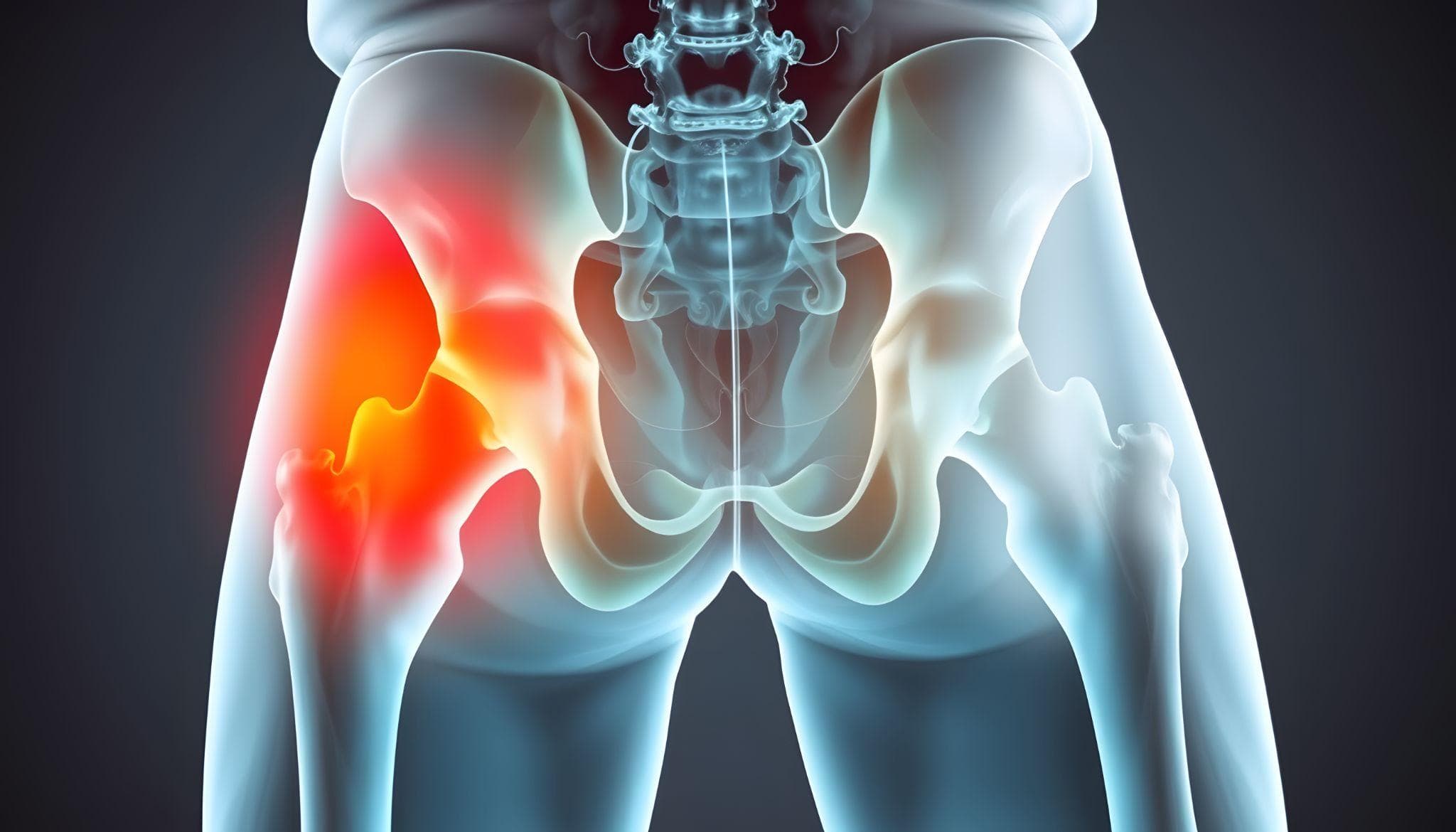
X-ray style illustration highlighting pain and damage in the hip joint.
People say "hip fracture" as if it is one thing. It is not.
There are two very different injuries that get lumped under that term. One is a fracture of the upper part of the thigh bone (the femur). The other is a fracture of the hip socket — the cup-shaped cavity in your pelvis where the ball of your thigh bone sits. This second one is called an acetabular fracture, and it is a completely different injury requiring a completely different surgical approach.
Getting these two confused is not just a matter of terminology. The treatment plan, the surgeon you need, the operation involved, and the recovery timeline are all different. This article explains what sets them apart — and why, if you or someone you know has a suspected acetabular fracture, finding a specialist rather than a general orthopaedic surgeon makes a genuine difference.
The Anatomy of Your Hip Joint
Before getting into fractures, it helps to understand the joint itself.
Your hip is a ball-and-socket joint. The ball is the femoral head — the rounded top of your thigh bone (femur). The socket is the acetabulum — a cup-shaped cavity that is part of your pelvic bone.
In a healthy hip, these two fit together tightly. The socket is lined with smooth cartilage, and the whole joint is held in place by strong ligaments and muscles. When things are working well, it is one of the most stable and load-bearing joints in the body.
What Is a Hip Fracture?
When most people say "hip fracture," they are usually talking about a fracture of the femoral neck — the narrow section of the thigh bone just below the ball. This is the most common hip fracture, particularly in elderly people following a fall.
It can also refer to fractures at the top of the femur (trochanteric fractures), which are equally common in older adults.
Hip fractures of this type are serious and need prompt surgery — usually a hip replacement or internal fixation — but the anatomy involved is relatively straightforward. The femoral bone can be fixed or replaced from the outside in.
Who Gets Hip Fractures?
Mostly older adults. Osteoporosis significantly weakens the femoral neck, making it vulnerable to low-energy trauma like a simple fall. Women over 65 are at particularly high risk. In India, these fractures are increasingly common given the aging population and low calcium and vitamin D levels in a large percentage of the elderly population.
What Is an Acetabular Fracture?
An acetabular fracture is a break in the socket of the hip joint — the cup part of the pelvis that holds the femoral head in place. This is the acetabulum.
Here is what makes it different: the acetabulum sits deep inside the pelvis. It is surrounded by major blood vessels (including those supplying the legs), the sciatic nerve (the largest nerve in the body), the bladder, the intestines, and the ureter. Reaching this bone surgically means navigating all of that.
That is why acetabular fracture surgery is, in the words of specialists, working from the inside out — fixing the broken socket while avoiding the dense network of vital structures around it.
Who Gets Acetabular Fractures?
Mostly younger adults in high-energy trauma — road accidents, vehicle collisions, falls from significant height. The force that fractures the acetabulum is usually the femoral head being driven hard into the socket.
In older adults with osteoporosis, low-energy falls can occasionally cause acetabular fractures too — especially the anterior column and hemitransverse patterns, which are the most common types in elderly patients.
Why Acetabular Fractures Are Harder to Treat
This is not an exaggeration. Acetabular fractures are genuinely among the most technically demanding operations in orthopaedic surgery.
1. Access Is the Problem
The acetabulum is buried inside the pelvis. Unlike a femoral fracture — where the bone is accessible with a relatively straightforward incision — fixing the acetabulum means the surgeon must work through or around the pelvis while keeping major structures out of harm's way. There are several surgical approaches, each with its own set of risks and indications. Getting the choice wrong affects the outcome significantly.
2. Fracture Patterns Are Complex
Acetabular fractures do not break in one simple way. There are at least ten recognised fracture patterns — anterior wall, posterior wall, transverse, T-type, both-column, and more. Each has a different surgical implication. Most urban trauma centres designate only one or two surgeons as their "pelvic and acetabular specialists" specifically because the skill set required is highly focused.
3. Timing Matters More
Surgery for an acetabular fracture is ideally performed within the first 7–10 days of injury. Waiting longer makes the surgery harder — the fracture begins to consolidate, scar tissue forms, and the risk of complications rises. Most hip fractures also benefit from early surgery, but the acetabular window is tighter.
Treatment Approaches
1. Hip Fracture (Femoral) Treatment
Most femoral hip fractures need surgery within 48 hours, ideally sooner. The two main options are:
Internal Fixation — metal screws or a sliding hip screw system hold the bone in place while it heals. Usually preferred in younger patients and in certain fracture types.
Hip Replacement (Hemi or Total) — removing the damaged ball and replacing it with an implant. More commonly used in older patients or when the blood supply to the femoral head is compromised.
Orthopedic surgeons performing a hip replacement procedure.
2. Acetabular Fracture Treatment
Non-surgical management is possible for non-displaced fractures in elderly patients with significant surgical risk. This involves careful mobilisation and pain management, with close monitoring.
Open Reduction and Internal Fixation (ORIF) is the standard surgical approach for displaced acetabular fractures. The fragments are reduced (brought back into alignment) and fixed with plates and screws. The goal is to restore the smooth, congruent surface of the hip socket so the joint can function without progressing to post-traumatic arthritis.
Acute Total Hip Arthroplasty (THA) — in select older patients where the acetabular fracture is severe and the risk of post-traumatic arthritis is high, some surgeons perform a hip replacement at the same time as fracture fixation. This is a more complex approach but can avoid a second surgery later.
What Happens If an Acetabular Fracture Is Not Properly Treated?
The main long-term risk is post-traumatic arthritis. When the hip socket heals with even a small step or gap in its surface, the cartilage wears down unevenly. Within a few years — sometimes faster — the joint becomes painful and stiff. The patient may need a hip replacement that could have been avoided or delayed with better initial fracture management.
There is also the risk of avascular necrosis (AVN) — where the blood supply to the femoral head is disrupted, causing the bone to die. AVN is seen in a significant proportion of acetabular fracture patients, particularly those with associated hip dislocations.
Early, anatomical reduction by an experienced surgeon reduces — though does not eliminate — these risks.
Finding the Right Surgeon for an Acetabular Fracture in Greater Noida
This is where the distinction really matters. Not every orthopaedic surgeon operates on acetabular fractures. Most community hospitals have general orthopaedic teams. Complex acetabular cases are typically referred to surgeons with specific training and ongoing experience in pelvic trauma.
Dr. Akash Dubey at Your Bone Mechanic clinic in Greater Noida West is a Certified Pelvic-Acetabular Surgeon and a Member of AOPAS (Association of Pelvic and Acetabular Surgeons) — a specialist body in India specifically for surgeons focused on these injuries. With over a decade of experience and training across institutions including Apollo Indraprastha Hospital Delhi and Max Hospitals, Dr. Dubey brings the kind of focused expertise that acetabular fractures demand.
If you have been told you or a family member has a "hip fracture" following a road accident or a high-energy injury — it is worth confirming whether that is a femoral fracture or an acetabular fracture. The difference changes everything about the treatment.
Frequently Asked Questions
Q1: Can you mistake an acetabular fracture for a simple hip fracture?
Yes, and it happens. Without a CT scan, even an X-ray may not fully reveal the fracture pattern. Any high-energy hip injury should have a CT to properly characterise the injury.
Q2: Is acetabular fracture surgery available in Greater Noida?
Yes. Dr. Akash Dubey at Your Bone Mechanic clinic offers specialised pelvic and acetabular fracture care in Greater Noida West, supported by advanced imaging and surgical facilities at KDSG Superspeciality Hospital.
Q3: How long after an acetabular fracture can surgery be done?
Ideally within 7–10 days of injury. Beyond 2–3 weeks, the surgery becomes significantly more difficult. If you have been told to "wait and see" for more than a week without a clear plan, it is worth getting a second opinion.
Q4: What is the recovery like after acetabular fracture surgery?
Most patients are non-weight-bearing for 6–10 weeks after surgery. Physiotherapy begins early to maintain muscle strength and joint mobility. Full recovery — returning to daily activities — typically takes 4–6 months, with some cases taking longer.
Q5: Does an acetabular fracture always lead to arthritis?
Not always. The quality of the surgical reduction matters enormously. The better the hip socket is restored, the lower the risk of post-traumatic arthritis. This is why the surgeon's experience directly affects long-term outcomes.
Contact Dr. Akash Dubey — Your Bone Mechanic
Facing a hip or acetabular fracture diagnosis and not sure what comes next? A consultation with a specialist who deals with these injuries regularly is the right starting point.
Dr. Akash Dubey
MBBS (KGMU, Lucknow) | MS | DNB Ortho | FIAS | FIJR | FIFA Diploma in Football Medicine
Certified Pelvic-Acetabular Surgeon | Member, AOPAS
Clinic: Shop No. 24, Ground Floor, Gaur City Arcade, Near Sarvodaya Hospital, Gaur City 2, Greater Noida West, U.P. – 201301
To book a consultation, call +91-8130441429