Pelvic Fractures in Elderly Patients: Unique Risks, Treatment Approach, and Road to Recovery

Patient wearing waist band post-surgery.
A hip fracture in an elderly person is often described as a catastrophic event. Pelvic fractures in the elderly can be equally serious — but they do not always get the same level of attention.
As India's population ages, pelvic fragility fractures are becoming more common. These are fractures that happen not from high-speed accidents, but from low-energy trauma — a slip on a wet bathroom floor, a missed step, losing balance while getting out of a chair. The bone was already weakened before the fall happened. The fall just provided the tipping point.
This article covers what makes pelvic fractures particularly challenging in elderly patients, how treatment decisions are made differently in this group, what recovery looks like, and what families need to watch for.
Why Elderly Patients Are More Vulnerable
1. Osteoporosis
The underlying reason most elderly patients fracture their pelvis in a minor fall is osteoporosis — a condition in which bone mineral density decreases over time, making bones progressively more brittle and prone to fracture.
Osteoporosis is extremely common. Women are disproportionately affected, particularly after menopause when the bone-protective effects of oestrogen disappear. In India, poor calcium intake, low vitamin D levels (despite abundant sunlight — because most people are indoors or covered), and inadequate physical activity contribute to high rates of osteoporosis across both men and women.
A bone that has lost significant density does not need a dramatic force to break. The pelvis that easily withstands years of walking and physical activity can fracture from something as mundane as coughing or rolling over in bed in the most severe cases of osteoporosis.
2. Reduced Balance and Muscle Strength
Falls in the elderly are not random — they reflect a loss of balance, coordination, and muscle strength that accumulates over years. Sarcopenia (age-related muscle loss) means the muscles that would normally absorb the energy of a stumble or misstep are no longer capable of doing so. The fall happens because the body cannot correct itself in time.
Comorbidities
Elderly patients rarely have just one health issue. Hypertension, diabetes, chronic kidney disease, heart failure, and dementia are all common — and all affect how a pelvic fracture is managed. Some of these conditions affect surgical risk directly. Others — like diabetes — slow bone healing. Medications like blood thinners (prescribed for atrial fibrillation or after a heart attack) complicate surgical planning because they increase bleeding risk.
What Type of Pelvic Fractures Are Common in the Elderly?
The fracture patterns seen in elderly patients differ from those in younger adults injured in road accidents.
1. Lateral compression fractures — These are the most common pelvic fractures in the elderly. A fall onto the hip drives the femoral head inward, compressing the front of the pelvis. The pubic rami (the front arch of the pelvis) typically break. In many cases, the posterior ring — the sacrum and sacroiliac joints — also cracks. Fortunately, these fractures are often stable in their initial presentation, meaning the bones have not significantly displaced.
2. Sacral insufficiency fractures — These are fractures of the sacrum (the triangular bone at the base of the spine) that happen not from a dramatic injury but from the ordinary stresses of walking and standing. They are increasingly recognised in osteoporotic elderly patients, often causing severe low back pain that is mistaken for back strain or disc disease. Many are missed on initial X-ray and require MRI for diagnosis.
3. Acetabular fractures (elderly pattern) — In younger patients, acetabular fractures usually involve the posterior wall. In the elderly, the anterior column and medial wall are more commonly involved, reflecting the different force vectors of a low-energy fall versus high-speed trauma.
The Unique Challenges of Managing Elderly Pelvic Fractures
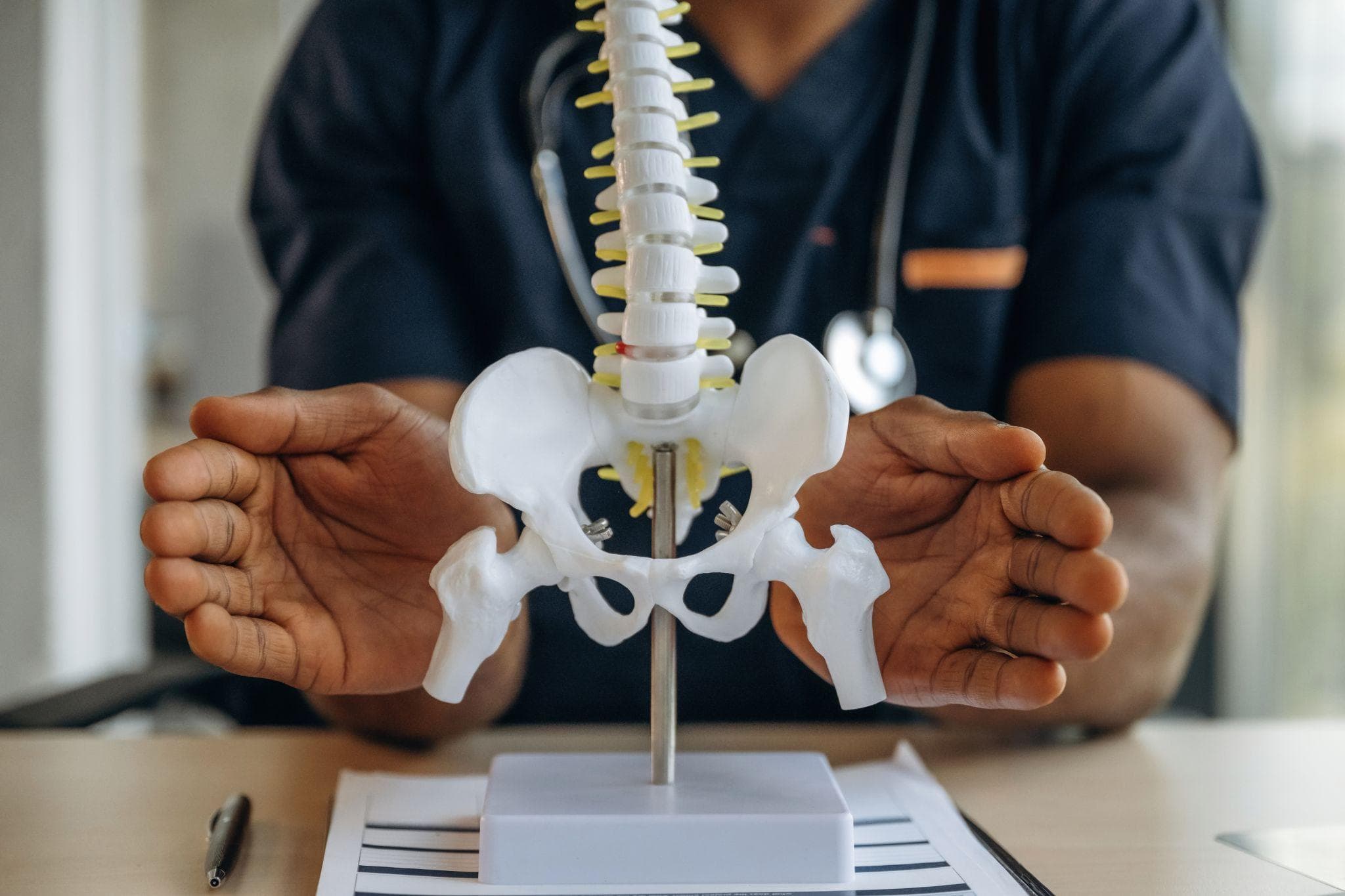
A doctor is presenting a mini model of the spine and hip bones of the body in the clinic.
1. Pain and Early Mobilisation: The Dilemma
Here is the core tension in managing these fractures: the fracture hurts, so the patient does not want to move. But not moving is extremely dangerous.
Prolonged immobility in an elderly person causes:
- Pneumonia — from poor lung expansion in a lying patient
- Deep vein thrombosis (DVT) and pulmonary embolism — blood clots form in the leg veins of immobile patients and can travel to the lungs, where they can be fatal
- Pressure sores (bedsores) — skin breakdown over bony prominences from sustained contact with the bed
- Muscle wasting — elderly patients lose muscle mass very rapidly with inactivity
- Delirium — confusion and disorientation that are more common in hospitalised elderly patients, worsened by immobility, pain, and disrupted sleep
- Loss of functional independence — some elderly patients never recover their pre-fracture level of function after a prolonged period of immobility
The goal is to get the patient moving as early as safely possible. This sometimes means accepting that they will be in some pain during mobilisation — because the alternative is worse.
2. Should Surgery Be Done?
This is the question that requires the most careful judgement in elderly pelvic fracture patients.
Historically, surgery in elderly patients with pelvic fractures was avoided. The reasoning was: the risks of anaesthesia and surgery in a frail, medically compromised patient are high, and many of these fractures will eventually heal on their own with enough time.
The evidence is shifting. Studies increasingly show that early surgical stabilisation in elderly patients who cannot mobilise with conservative management leads to better outcomes — lower mortality, lower complication rates, and faster functional recovery — than prolonged conservative management. This is because immobility is the real killer in this age group.
However, surgery is not the right answer for every elderly patient with a pelvic fracture. The factors that influence this decision include:
- Fracture stability — genuinely stable, minimally displaced fractures in patients who can begin mobilising with pain management may not need surgery
- Degree of displacement — significantly displaced fractures rarely achieve satisfactory alignment without fixation
- Patient's pre-fracture functional level — a patient who was independently mobile and active before the fall has more to gain from surgery than one who was already bedbound
- Surgical risk — cardiac and pulmonary risk, current anticoagulation, and the patient's overall frailty score all factor in
- Patient and family wishes — after an honest discussion of the risks and benefits, the patient's own preferences matter
The decision should not be made by default. "Too old for surgery" is not a medical conclusion — it is a dismissal that has harmed many elderly patients who would have benefited from intervention.
Conservative Management in the Elderly: What It Looks Like
When surgery is not appropriate or not required, conservative management in elderly patients focuses on:
1. Pain control that allows movement — Paracetamol, NSAIDs (used cautiously given renal and gastric risks in the elderly), and sometimes short-term opioids. The target is enough pain relief to allow the patient to sit up, stand, and attempt walking.
2. Early mobilisation — with physiotherapy guidance, most patients can begin supported standing within 24–72 hours of injury. The weight-bearing plan depends on fracture type and patient tolerance.
3. DVT prophylaxis — low-molecular-weight heparin injections or oral anticoagulants, continued for several weeks.
4. Bone health optimisation — Calcium and vitamin D supplementation are started immediately. Bisphosphonate therapy (to slow further bone density loss) is typically started once the acute fracture is managed.
5. Delirium prevention — orientation, regular lighting cycles, keeping the patient's usual medications, involving family in care, and avoiding sedating medications wherever possible.
6. Nutritional support — protein and caloric intake are essential for bone healing and muscle maintenance. Malnutrition is extremely common in hospitalised elderly patients and significantly slows recovery.
Surgical Management in the Elderly: Minimally Invasive Options
When surgery is decided upon for an elderly patient with a pelvic fracture, the approach is often different from what would be used in a younger patient.
Percutaneous iliosacral screwing — Long screws are placed into the sacroiliac joint through small skin incisions, stabilising the posterior ring without a large open operation. Less blood loss, shorter operating time, lower anaesthetic burden.
Anterior plate fixation through limited incisions — For certain anterior ring fractures, plates can be placed through smaller approaches than the full ilioinguinal or Stoppa approaches used in younger patients.
Sacroplasty — For osteoporotic sacral fractures specifically, a procedure where bone cement is injected into the fractured sacrum under imaging guidance. This is not open surgery and can be done under sedation. It significantly reduces pain and allows earlier mobilisation.
Acute hip replacement — In elderly patients with complex acetabular fractures where reconstruction is unlikely to produce a good articular surface (due to comminution or poor bone quality), replacing the hip joint simultaneously with fracture management can be the best option for both longevity of outcome and speed of recovery.
What Families in Greater Noida Need to Know
If an elderly family member has fallen and is in pain in the hip, groin, or lower back — get imaging done the same day. Do not wait to see if it "settles."
If a pelvic fracture is found, push for early evaluation by an orthopaedic surgeon experienced in these injuries — not just the emergency team, and not necessarily the first surgeon who reviews the X-ray. Treatment decisions for elderly pelvic fractures are complex and benefit from specialist input.
The goal of treatment — whether surgical or not — is to get your parent or grandparent moving again as quickly as safely possible. Extended bedrest is a complication, not a treatment.
Dr. Akash Dubey at Your Bone Mechanic clinic in Gaur City 2, Greater Noida West sees elderly pelvic fracture patients regularly, and brings the kind of careful, individualised assessment these cases require. His clinic offers structured recovery plans that account for the unique needs of older patients — not just the fracture, but the bone health, the rehabilitation, and the long-term picture.
Preventing the Next Fracture
This is often overlooked in the rush to manage the acute injury — but it matters enormously. A person who has had a fragility fracture of the pelvis is at significantly elevated risk of another fracture.
Falls prevention — home modification (grab rails, removing rugs, improving lighting), vision checks, medication review (many common medications increase fall risk), and balance training.
Bone health — DEXA scan (bone density measurement), calcium and vitamin D supplementation, bisphosphonate or other anti-osteoporosis treatment as recommended.
Physiotherapy — ongoing strength and balance training after recovery from the fracture reduces future fall risk.
Frequently Asked Questions
Q: My 75-year-old mother has a pelvic fracture. Does she need surgery?
Not automatically. The decision depends on the fracture type, her functional level, her medical condition, and whether she can mobilise. A thorough assessment by a pelvic fracture specialist is the right starting point.
Q: How long will it take for an elderly person to recover from a pelvic fracture?
Stable fractures managed conservatively: 3–4 months. Surgical cases in elderly patients: 4–6 months minimum, sometimes longer. The goal is progressive return to independence, not immediate return to full activity.
Q: Is it normal for elderly patients to be confused after a pelvic fracture?
Delirium (acute confusion) is common in elderly hospitalised patients, especially after pain, disrupted sleep, and medications. It is not necessarily permanent and often improves with good care, familiar faces, and early mobilisation.
Q: What is osteoporosis and can it be treated?
Osteoporosis is a reduction in bone density that increases fracture risk. It is treatable — with lifestyle modification, calcium and vitamin D supplementation, and medications (bisphosphonates, denosumab, etc.). Treatment reduces the risk of further fractures significantly.
Contact Dr. Akash Dubey — Your Bone Mechanic
For elderly pelvic fracture evaluation and treatment in Greater Noida and the NCR:
Dr. Akash Dubey
MBBS (KGMU, Lucknow) | MS | DNB Ortho | FIAS | FIJR | FIFA Diploma in Football Medicine
Certified Pelvic-Acetabular Surgeon | Member, AOPAS
Clinic: Shop No. 24, Ground Floor, Gaur City Arcade, Near Sarvodaya Hospital, Gaur City 2, Greater Noida West, U.P. – 201301
To book a consultation, call +91-8130441429