What Is AOPAS and Why Does It Matter When Choosing a Pelvic Surgeon in Greater Noida?
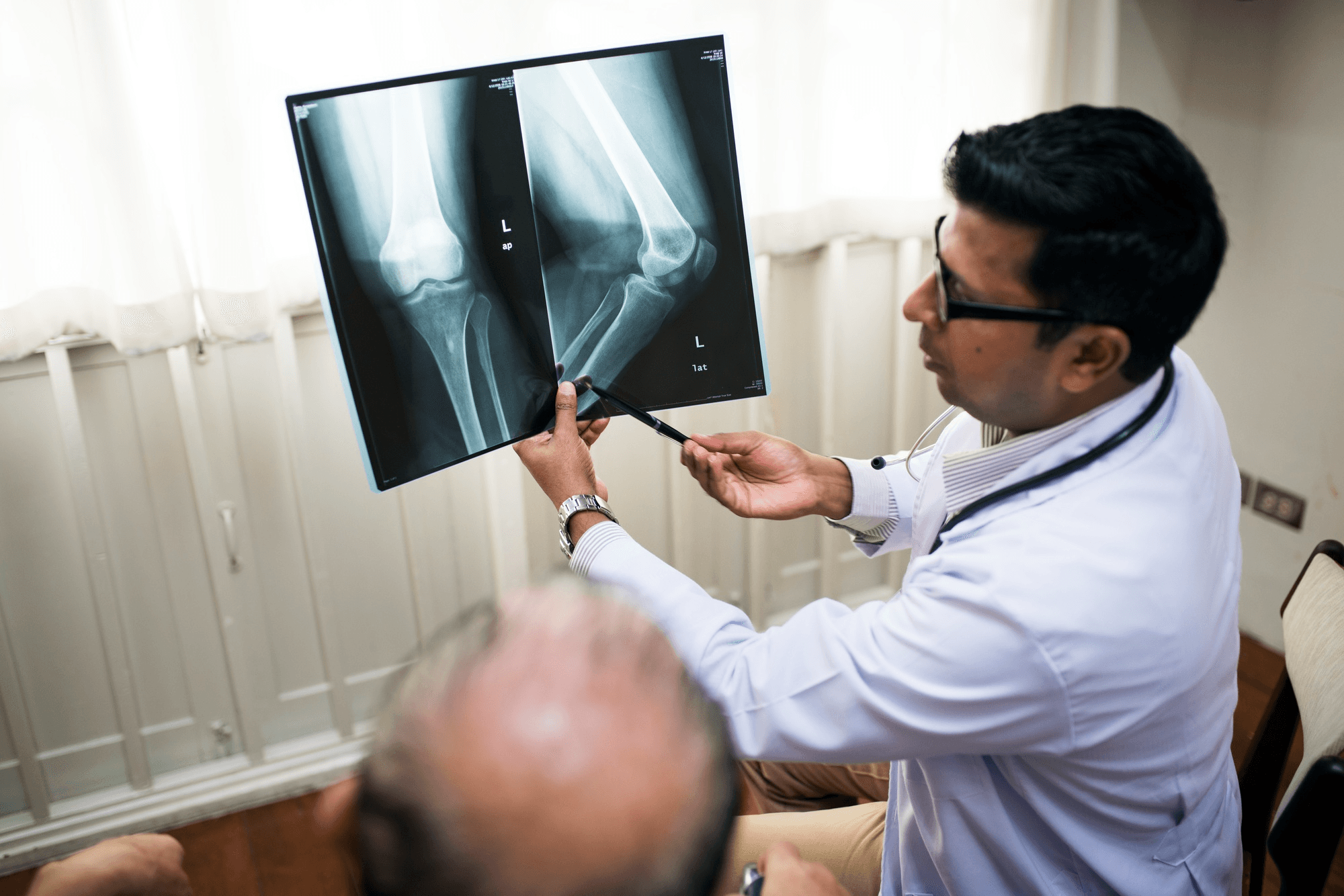
An orthopaedic surgeon explaining pelvic fracture.
When you are looking for an orthopaedic surgeon for a pelvic fracture, you will come across qualifications and affiliations that mean nothing unless someone explains them. MBBS, MS, DNB Ortho — most people understand these are medical degrees. But what about AOPAS? What about "Certified Pelvic-Acetabular Surgeon"? And why do these matter when you are trying to choose who operates on one of the most complex fractures in orthopaedics?
This article explains what AOPAS is, what it means to be a Certified Pelvic-Acetabular Surgeon, and why these credentials should factor into your decision when seeking care for pelvic or acetabular fractures in Greater Noida or the NCR.
What Is AOPAS?
AOPAS stands for the Association of Pelvic and Acetabular Surgeons — a specialist body in India dedicated to advancing the practice of pelvic and acetabular surgery.
To understand why this organisation exists, you need to appreciate what pelvic and acetabular surgery actually involves. These are not standard orthopaedic procedures. The pelvis and hip socket involve some of the most complex anatomy in the body — major blood vessels, the sciatic nerve, the bladder, the bowel — all in close proximity to the bones that need to be fixed. The fracture patterns are highly variable and require three-dimensional surgical planning. The number of surgeons in India who regularly operate on these injuries is relatively small.
AOPAS was created specifically to:
- Bring together surgeons with a focused interest in pelvic and acetabular injuries
- Establish standards of training and practice in this subspecialty
- Facilitate continuing education, case discussions, and peer learning
- Promote awareness of the specialised nature of these injuries in the broader medical community
Membership in AOPAS is not open to every orthopaedic surgeon. It requires demonstrated interest and expertise in pelvic and acetabular surgery — making it a meaningful signal of specialist focus in this area.
What Does "Certified Pelvic-Acetabular Surgeon" Mean?
The certification indicates that a surgeon has completed specific training focused on pelvic and acetabular fracture care — training that goes beyond the standard orthopaedic surgery curriculum.
General orthopaedic surgery training in India produces surgeons who are competent across a wide range of conditions — fractures, joint replacement, sports injuries, spine — but does not provide deep expertise in every subspecialty. Pelvic and acetabular surgery is one of the areas where focused subspecialty training makes a measurable difference.
A certified pelvic-acetabular surgeon will have:
- Studied the detailed anatomy of the pelvis under the mentorship of experienced pelvic surgeons
- Learned the specific surgical approaches — Kocher-Langenbeck, ilioinguinal, modified Stoppa, combined approaches — and when each is appropriate
- Operated on a range of fracture patterns in supervised and independent settings
- Developed competence in intraoperative fluoroscopy and other guidance tools used in pelvic surgery
- Handled the associated medical complexity — haemorrhage management, bladder injuries, nerve monitoring — that accompanies severe pelvic trauma
This training cannot be replicated simply by a surgeon occasionally encountering a pelvic fracture case. It requires deliberate focus, mentored experience, and ongoing practice.
Why Specialisation Matters in Pelvic Fracture Surgery
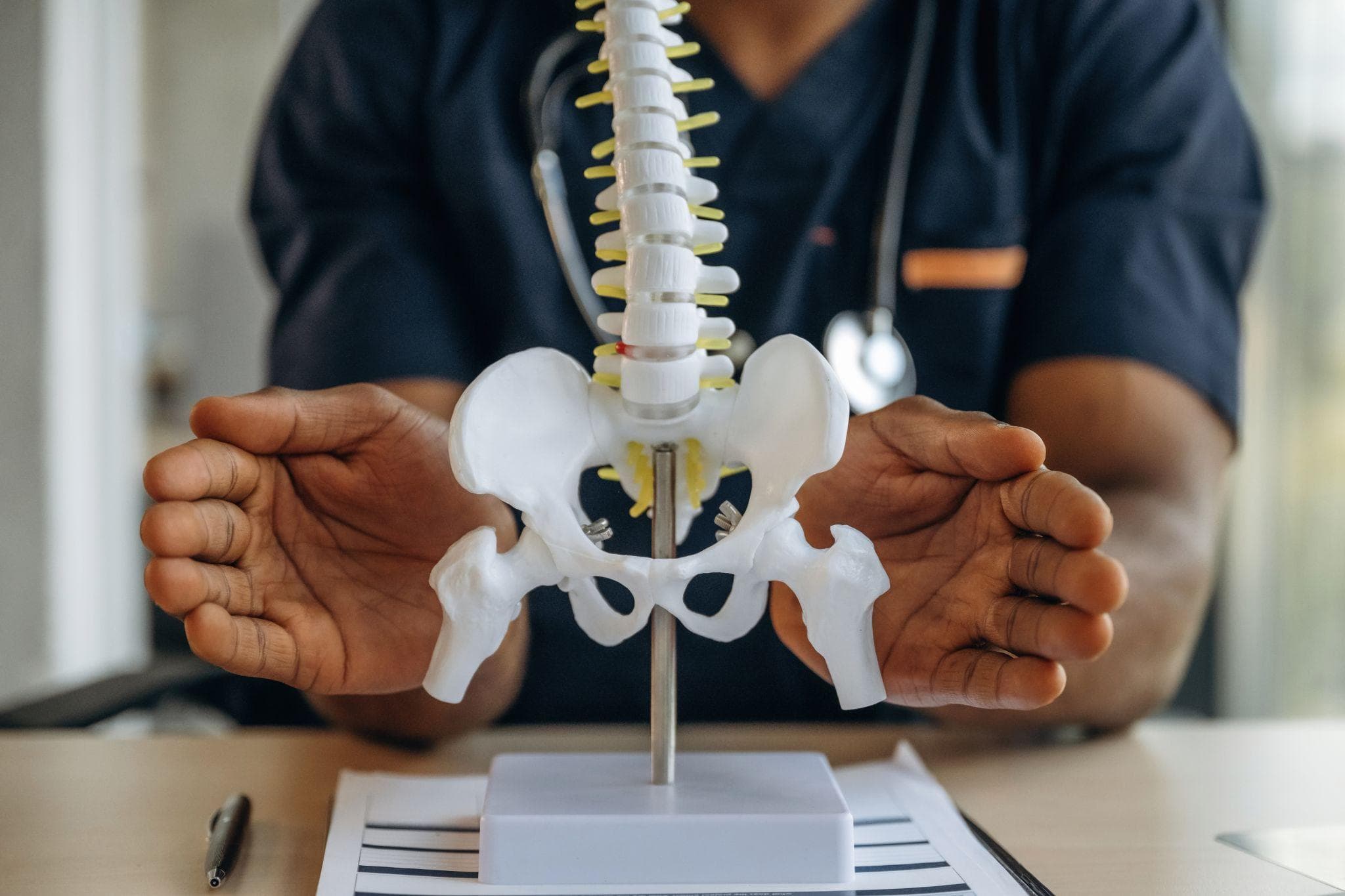
A doctor is presenting a mini model of the spine and hip bones of the body in the clinic.
The evidence that surgeon volume and specialisation affect outcomes in complex orthopaedic surgery is well established. Multiple studies have shown that patients with acetabular fractures treated at high-volume specialist centres — by surgeons who regularly perform these procedures — achieve better fracture reduction, have lower complication rates, and have better functional outcomes at follow-up.
This is not a subtle difference. A poorly reduced acetabular fracture — one where the joint surface has a step or gap that was not corrected — can lead to post-traumatic arthritis within years of the injury. A patient who might have recovered full hip function ends up returning for a hip replacement surgery that might have been unnecessary or at least delayed by a decade.
Conversely, a well-managed pelvic ring fracture — one where the unstable pelvis has been stabilised before significant displacement occurred — allows early mobilisation, prevents haemorrhage, and sets the patient up for a full functional recovery.
The difference often comes down to whether the surgeon treating the fracture has the specific training and regular experience to manage it optimally.
Dr. Akash Dubey: Credentials and Experience
Dr. Akash Dubey is one of the few pelvic and acetabular surgery specialists practising in Greater Noida and the wider NCR region. His qualifications reflect the breadth of his training:
Degrees and Diplomas
- MBBS — King George's Medical University (KGMU), Lucknow — one of India's most respected medical institutions
- MS Orthopaedics — Post-graduate surgical training in orthopaedics
- DNB Orthopaedics — Diplomate of National Board in Orthopaedics — the national-level post-graduate qualification in India
- FIAS — Fellowship in arthroscopy and sports surgery
- FIJR — Fellowship in joint replacement surgery
- FIFA Diploma in Football Medicine — an internationally recognised diploma from the Fédération Internationale de Football Association, focused on sports medicine and musculoskeletal care for athletes
Specialist Credentials
- Certified Pelvic-Acetabular Surgeon — focused subspecialty certification in pelvic and acetabular fracture surgery
- Member, AOPAS — Association of Pelvic and Acetabular Surgeons
Hospital Experience
Dr. Dubey has worked at or been affiliated with some of India's most respected institutions, including:
- Apollo Indraprastha Hospital, Delhi — one of the country's premier tertiary care centres
- Apollo Spectra Hospital, Greater Noida
- Max Hospital, Gurugram
- Max Super Speciality Hospital, Saket
- IGESI Hospital, Delhi
- JPC Hospital, Greater Noida
- SRN Hospital, Uttar Pradesh
He currently serves as Consultant in the Department of Orthopaedics at KDSG Superspeciality Hospital, Greater Noida, and practices at his dedicated clinic — Your Bone Mechanic — at Gaur City 2, Greater Noida West.
With over a decade of experience and more than 1,000 successful procedures across joint replacement, arthroscopy, trauma surgery, and pelvic and acetabular care, Dr. Dubey brings a level of focused expertise that is uncommon in community orthopaedic practice.
Why AOPAS Membership Matters for Patients in Greater Noida
Greater Noida and the NCR are served by many orthopaedic surgeons. Most of them are competent, experienced practitioners who handle the majority of orthopaedic cases effectively.
But pelvic and acetabular fractures are not typical orthopaedic cases. They are high-complexity, high-stakes injuries where the difference between good and poor surgical management has consequences that play out over years. In a region that sees significant road traffic accidents — the Noida-Greater Noida Expressway and surrounding highways generate their share of severe trauma — having access to a certified pelvic-acetabular surgeon locally is not a luxury. It is a clinical need.
Before AOPAS-affiliated surgeons like Dr. Dubey established practices in Greater Noida, many of these cases required transfer to Delhi's tertiary centres — adding time, travel burden on families, and logistical complexity to an already difficult situation.
The availability of specialist pelvic fracture care locally means:
- Early evaluation without the delay of transfer
- Definitive surgical management within the critical first 7–10 day window
- Structured post-operative recovery and rehabilitation without logistical barriers
- Long-term follow-up that is accessible and consistent
How to Choose a Surgeon for a Pelvic Fracture
If you or a family member has a pelvic or acetabular fracture and you are trying to evaluate the right surgeon, here are the practical questions to ask:
Do you regularly perform pelvic and acetabular fracture surgery? — Volume matters. A surgeon who sees these cases monthly manages them very differently from one who sees a couple per year.
What is your specific training in pelvic fractures? — General orthopaedic training is not the same as subspecialty pelvic training.
What surgical approach do you use for this fracture type? — A surgeon who understands the multiple approaches and their indications demonstrates the depth of specialisation needed.
How many of these fractures do you operate on per year? — Not a definitive number, but context that tells you whether this is a regular part of their practice.
What is your experience with complications? — No surgeon can promise a complication-free outcome. The question is whether they manage complications themselves or have a multidisciplinary team to support them.
Credentials like AOPAS membership and pelvic-acetabular certification are objective markers that help answer several of these questions without having to ask every one directly.
What Patients Have Said About Dr. Akash Dubey
Patients who have been treated at Your Bone Mechanic clinic consistently note Dr. Dubey's approach of thorough explanation, unhurried consultation, and careful, imaging-led decision-making. One patient noted that Dr. Dubey "didn't recommend unnecessary X-rays or tests" — a quality that reflects both clinical confidence and a patient-first ethic. Another described a complete satisfaction with wrist surgery outcomes, noting Dr. Dubey's availability for post-operative guidance as a defining quality of care.
These are the qualities that matter most in complex pelvic fracture management — where patients and families are often navigating frightening situations without a clear roadmap, and where the treating surgeon's role includes not just the technical procedure but also honest communication about what to expect.
Frequently Asked Questions
Q: Is AOPAS a government body or a professional association?
AOPAS is a professional association of surgeons with a specialist interest in pelvic and acetabular surgery. It is not a government regulatory body but functions as a subspecialty society — similar to how cardiologists have a specialist society, or spinal surgeons do.
Q: Does AOPAS membership guarantee a good outcome?
No credentials can guarantee outcomes — pelvic surgery involves real variables. But membership in AOPAS, along with certified pelvic-acetabular training, significantly increases the probability that the surgeon has the training, experience, and ongoing engagement with this subspecialty to manage these cases well.
Q: Is Dr. Akash Dubey the only pelvic fracture specialist in Greater Noida?
We are not in a position to comment on every surgeon in the region. What we can say is that Certified Pelvic-Acetabular Surgeons with AOPAS membership in the Greater Noida area are uncommon, making Dr. Dubey's clinic a meaningful local resource for these complex cases.
Q: Can I consult Dr. Akash Dubey for a second opinion on pelvic fracture management?
Absolutely. Second opinions on complex fractures are reasonable and appropriate. Patients are welcome to bring their imaging and reports for an independent review.
Contact Dr. Akash Dubey — Your Bone Mechanic
Dr. Akash Dubey
MBBS (KGMU, Lucknow) | MS | DNB Ortho | FIAS | FIJR | FIFA Diploma in Football Medicine
Certified Pelvic-Acetabular Surgeon | Member, AOPAS
Clinic: Shop No. 24, Ground Floor, Gaur City Arcade, Near Sarvodaya Hospital, Gaur City 2, Greater Noida West, U.P. – 201301
To book a consultation or a second opinion, call +91-8130441429
Dr. Dubey also sees patients at KDSG Superspeciality Hospital, Greater Noida.